
Mont-Tremblant Ski Resort
Mont-Tremblant, Quebec, has a ski mountain with terrain for a wide range of abilities and a pedestrian village that feels like stepping into a fairytale. We absolutely loved the base. The colorful buildings, little streets, and mountain backdrop were so adorable that we were stunned by how charming it was. It also felt like we’d landed in a European ski village, with shops, restaurants, cafés, and après all within an easy walk of one another.
The pedestrian village has more than 30 boutiques, along with restaurants, cafés, hotels, and activities. We could spend the day skiing, wander around the base, grab coffee or a meal, and find a great après spot without driving around. There are also grocery and specialty shops in the village, which helped us cover day-to-day needs while staying at the resort.
French is the main language in Quebec, but everyone we interacted with also seemed comfortable speaking English. We didn’t have any trouble communicating.
Mont-Tremblant has 763 acres of skiable terrain spread across four distinct sides of the mountain. We found the terrain great for beginners through advanced skiers and snowboarders alike. It feels like a compact resort compared with the huge Western mountains we visit, but there’s plenty of variety to explore across its four sides.
*We’ve included affiliate links in the article below to help direct you to the spots, experiences, and gear that we love. Please consider using them if you’re booking a stay or gearing up for your Canada adventure!
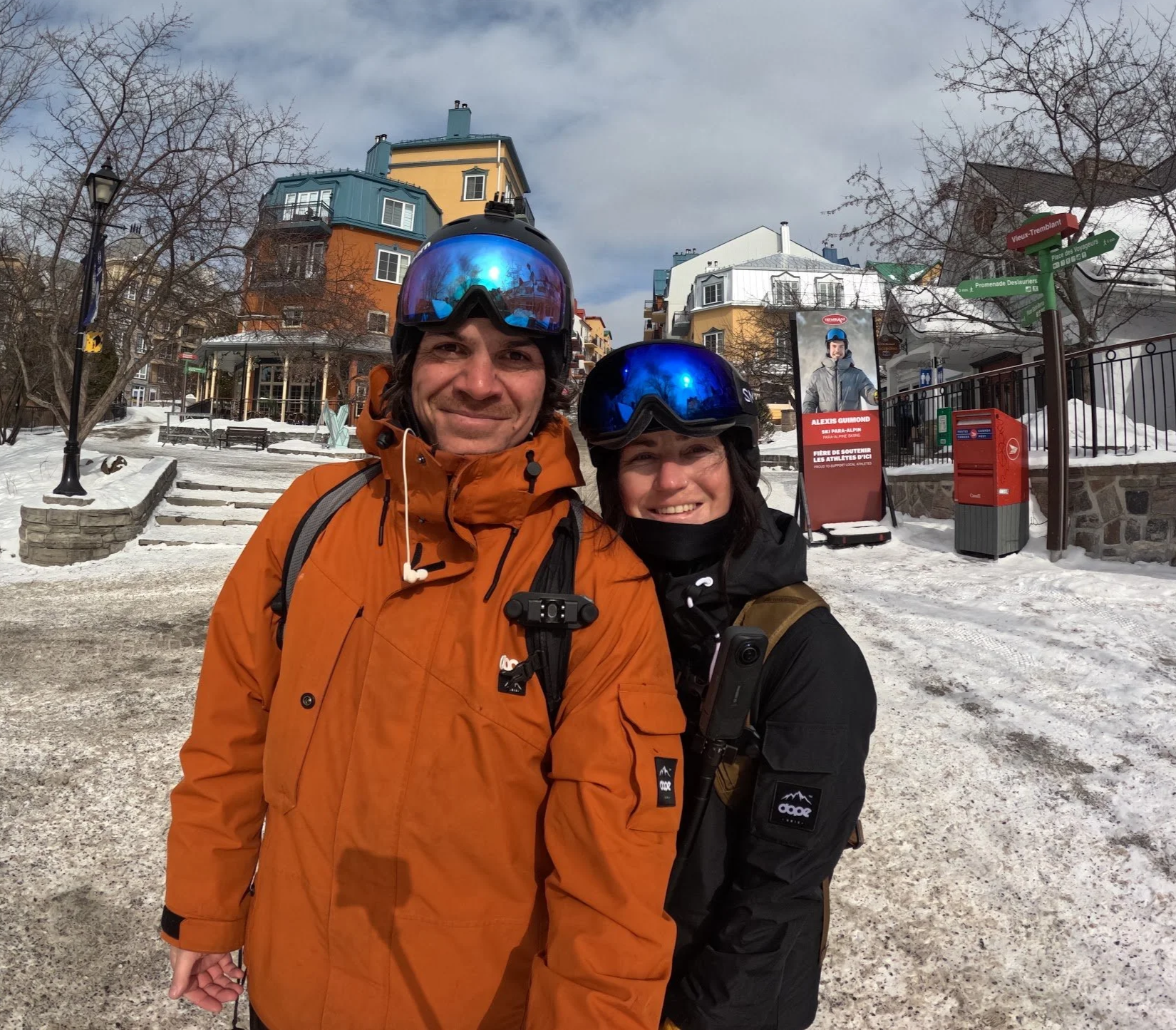
Jamie and Dre at Mont Tremblant, Quebec, Canada
Why Visit Mont-Tremblant in Winter?
Mont-Tremblant is a great fit if you want skiing and snowboarding alongside a walkable village, with places to eat and things to do close to the lifts. We loved being able to finish a day on the mountain and head straight into the village for coffee, shopping, dinner, or après.
Here are a few reasons we’d put Tremblant on a winter trip list:
A storybook base area: The pedestrian village is colorful, charming, and easy to explore on foot.
Four sides of mountain terrain: There are runs for different abilities, from beginner learning areas to steeper and more challenging terrain.
A lot to do between ski days: The resort offers activities such as snowshoeing, dog sledding, ice skating, snow tubing, and more. Check what’s running during your dates.
A stay-put kind of destination: If you stay in or near the pedestrian village, you can walk to many shops, restaurants, and après spots. We didn’t need to leave the base to find somewhere great to eat or unwind.
A taste of Quebec: French is part of daily life here, while we found English communication easy during our visit.
Mont-Tremblant Lift Ticket & Ikon Pass Details
For the 2026/27 season, Tremblant lists adult lift tickets from $148 CAD for a regular one-day ticket. High-season one-day rates are listed at $164–$195 CAD. The resort also lists multi-day tickets from $109 CAD per day when purchased by November 26, 2026. Prices are before taxes and fees and can change, so check the current rate for your dates before buying.
If you already have an Ikon Pass, the 2026/27 comparison lists unlimited access to Tremblant with the Ikon Pass and seven days with the Ikon Base Pass. Tremblant’s Tonik Pass offers up to 119 ski days on its calendar and is limited to Canadian residents. The Nordik Card offers two to four days and is also limited to Canadian residents. Each product has its own date and eligibility rules, so compare the current terms with your trip dates
The Four Sides of Mont-Tremblant
Tremblant’s four sides each have a different location and feel. Check the current trail map and mountain report when planning a ski day, since lift operations and open terrain can change.
South Side: This is the main pedestrian-village base, where you’ll find the colorful buildings, shops, restaurants, hotels, and many of the resort’s visitor services. It’s also a natural starting point for beginners, with learning zones and access to gentle runs.
North Side: Located around the other side of the mountain from the pedestrian village, the North Side has its own base area. Tremblant’s visitor guide describes it as quieter and more natural, with terrain that suits intermediate skiers.
Versant Soleil (Soleil Side): The sunny side is connected to the resort by the Casino Express gondola. A new beginner learning area is scheduled to open here for the 2026/27 winter season.
The Edge: This is a more remote-feeling side of the mountain, known for its more challenging terrain and glades. It does not have beginner trails, so check the trail map and conditions before heading over.
The mountain rises to 875 metres, has a 645-metre vertical drop, and includes 103 trails according to the resort’s current mountain statistics.
There are other ski areas in the Laurentians and nearby Lanaudière if you want to add a different mountain to your trip. Mont Blanc is one of the closest options. Other regional ski areas include Sommet Saint-Sauveur, Ski Garceau, Ski La Réserve, Val Saint-Côme, and Ski Montcalm. Check each mountain’s current operating dates and driving conditions before planning a day trip.
How to Get to Mont-Tremblant
By Car
Tremblant estimates the drive at about 90 minutes from Montréal (125 km / 77 miles) and two hours from Ottawa (165 km / 102 miles). Those are normal-condition estimates; winter weather, traffic, and road work can add time.
From Montréal, the drive heads north into the Laurentians. From Ottawa, follow the route suggested by your navigation app for your travel date. In either case, leave extra time in winter, drive to the conditions, and check Québec 511 for road coverage, visibility, traffic, closures, and warnings before setting out.
Quebec requires winter tires from December 1 through March 15 for vehicles registered in Quebec, including Quebec-registered rental vehicles. Vehicles registered outside Quebec are exempt from that legal requirement, but winter-ready tires and cautious driving still matter on snowy or icy roads. If you rent a vehicle, ask the rental company what tires are on it.
Border Crossing Info from the United States
If you’re driving from the United States, bring a valid passport for each traveler, including children. U.S. citizens may also be able to use other documents accepted for land entry, including a passport card, NEXUS card, or enhanced driver’s license. A passport is the simplest option for most visitors. Border officers will ask questions and decide whether each traveler may enter Canada. Canada Border Services Agency travel documents
Declare goods you’re bringing into Canada and check the current rules for items such as food, alcohol, firearms, and other restricted goods before you travel. Do not bring cannabis across the border, even if it is legal where you live or in Canada. Border wait times and crossing procedures can vary, so check current information before departure.
By Air
The closest major airport is Montréal–Trudeau International Airport (YUL). Tremblant lists the resort as about 90 minutes from Montréal. A direct airport shuttle operates during the winter season on selected days; check its schedule and book ahead. Private transfers are another option.
Once you arrive, complimentary resort shuttles connect many lodging areas with the pedestrian village. Free municipal transit also connects the resort with downtown Mont-Tremblant and the Village sector. Check the routes and schedules for your lodging and travel dates.
Where We Stayed
RV & Campervan Options
We stayed in our campervan in Parking Lot P4, Section C. According to Tremblant’s official parking guidelines, overnight parking for recreational vehicles is permitted there. This is what we did, and it was perfect for our trip.
We loved being able to wake up close to the mountain and walk into the village. The parking lot is not the same as a campground, so check the resort’s current rules and don’t assume it includes hookups or campground facilities.
Hotels, Lodges & Other Places to Stay
If vanlife isn’t your style, there are hotels and condos in the pedestrian village, on the mountainside, and in other resort lodging areas. Staying in the village puts you close to the lifts, shops, restaurants, and après. Some lodging is ski-in or ski-out, and a free shuttle serves many of the other resort areas. Compare the exact location and shuttle route before booking.
Luxury & Mid-range Stays:
Fairmont Tremblant: A landmark ski-in/ski-out hotel at the mountain base, with direct access to the pedestrian village. A great pick if convenience and full resort amenities are priorities.
Le Westin Tremblant: In the heart of the pedestrian village, a short walk from the lifts, shops, and restaurants. Rooms include fireplaces, and the hotel has a heated outdoor pool and on-site spa.
Homewood Suites by Hilton Mont-Tremblant Resort: A useful choice for families or longer stays. It’s in the village near Place Saint-Bernard, and suites have full kitchens and fireplaces. Breakfast is included.
Sommet des Neiges: Condo-style lodging at the base of the pedestrian village, with suite options for families and groups who want more space. The resort’s accommodations are steps from the Cabriolet lift.
Holiday Inn Express & Suites Tremblant: Right in the pedestrian village, with breakfast included, ski lockers, and an outdoor pool and hot tub. It’s a practical option if you want a hotel room and walkable access to the base.
Budget-friendly:
Auberge Manitonga: A hostel in the Old Village with shared dorm beds, private rooms, a communal kitchen, and free parking. It’s by a bus stop; check the current route and schedule for getting to the ski village.
Microtel Inn & Suites by Wyndham Mont-Tremblant: Outside the pedestrian village, with free continental breakfast, free parking, an indoor pool, waterslide, and outdoor spa. Plan on driving or confirming transportation for ski days.
Hôtel Mont-Tremblant: A small historic inn in the Old Village. It’s farther from the lifts than the pedestrian-village hotels, so compare the room rate with the added transportation time and cost.
Rates and availability vary by date. Check the property’s location, parking fees, cancellation terms, and whether a shuttle fits your plans before booking.
Skiing Mont-Tremblant: What to Expect
We found the terrain enjoyable for beginners through advanced skiers and snowboarders. With 763 acres across four sides, there are plenty of places to explore, and the different base areas make it easy to choose a starting point based on what you want from the day.
The South Side is the most convenient base for the pedestrian village and learning zones. The North Side gives you a quieter starting area, while Soleil and The Edge add more ways to explore the mountain. Beginners can use the resort’s learning zones and trail map to choose suitable terrain. More advanced visitors can check the map for the steeper trails and glades.
Check the daily mountain report before heading out, especially if you’re planning to reach one of the separate base areas or ski terrain that depends on current conditions.
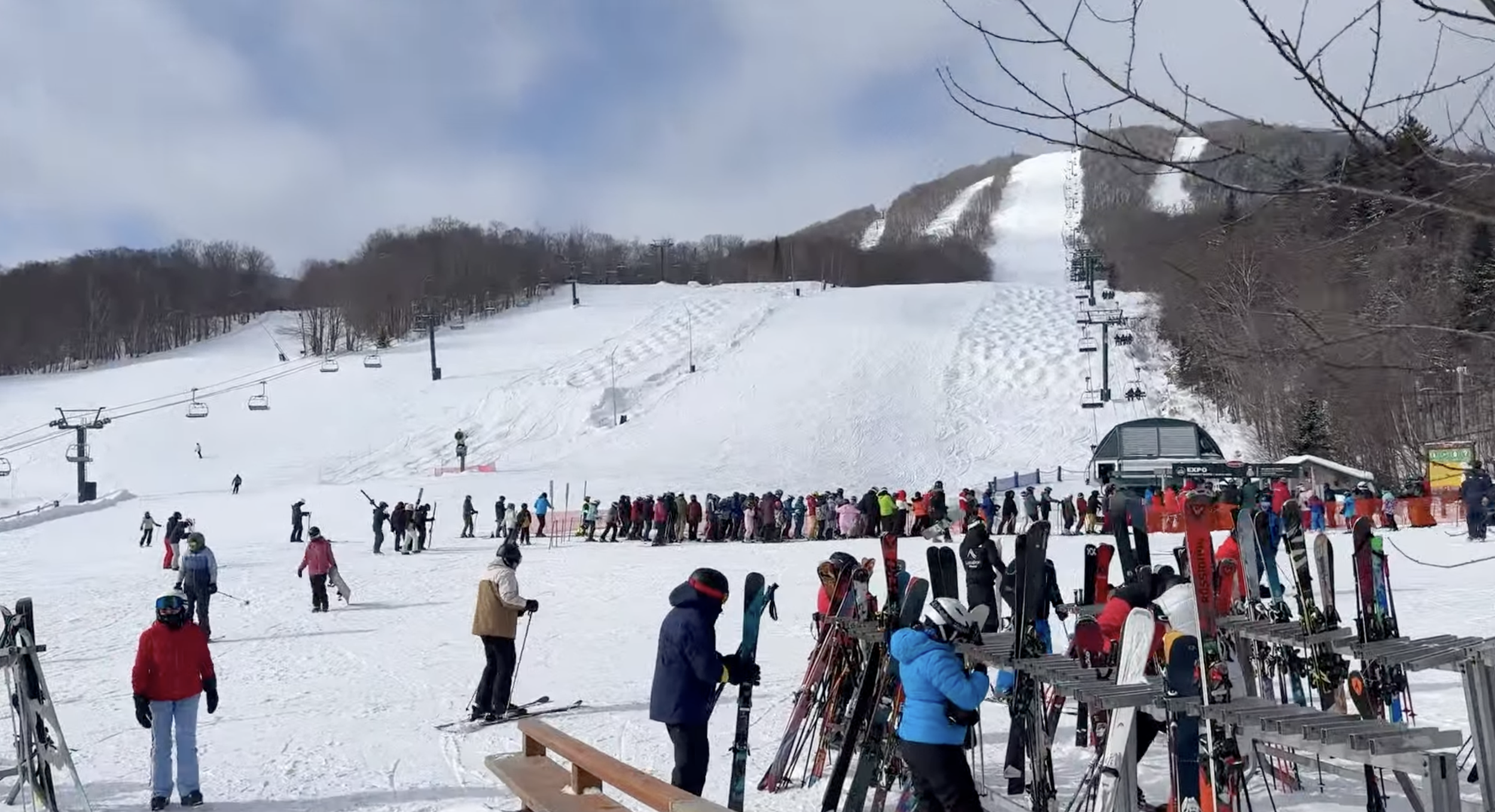
Mont Tremblant base area
Other Must-Do Winter Activities
Tremblant and the surrounding Laurentians offer plenty to do beyond skiing. Depending on snow conditions and your travel dates, consider:
Snow tubing: A fun option for families and groups, with eight runs and evening tubing on selected dates. It’s about 15 minutes from the resort, and transportation from the Tremblant Activity Centre is not included, so plan how you’ll get there.
Ice skating at the Ice Gardens: Skating is right in the pedestrian village, near Saint-Bernard Chapel. The Ice Gardens also feature a snow hill, Bavarian curling, and a firepit. The rink is seasonal, so check current dates and conditions before you go.
Dog sledding: Several guided outings are available around Tremblant, including one about seven minutes from the resort. Transportation is available for some tours. Book ahead, confirm the pickup details, and check age and activity requirements.
Snowshoeing: Explore designated mountain trails ranging from 1 to 5 km, or head to nearby Domaine Saint-Bernard for more than 19 km of marked snowshoe trails and heated shelters. Tremblant mountain trails require an access ticket or season pass; Domaine Saint-Bernard has its own access and trail rules.
Cross-country skiing at Domaine Saint-Bernard: The Domaine has more than 32 km of groomed cross-country ski trails, along with rentals, lessons, and a bistro. Check the trail report and rental availability before heading over.
Snowmobile tours: Guided tours take place outside the resort, with transportation available from the Tremblant Activity Centre for some departures. Check current availability, transfer details, age requirements, and operating conditions when booking.
Schedules, access, and transportation vary by activity and date, so confirm the details before building them into your plans.
Where to Eat
In the Village
The pedestrian village has more than 35 restaurants, bars, and cafés, so it’s easy to find something close to where you’re staying.
Here are a few places we’d put on the list:
Columbus Café: We stopped here for coffee and a donut. It’s a handy coffee stop in the village, and Tremblant lists it among its breakfast options.
La Maison de la Crêpe: A cozy option for sweet or savory crêpes at the base of the slopes.
Le Shack: A casual village restaurant for comfort food such as poutine, burgers, and sandwiches.
La Savoie: A good pick for fondue or raclette when you’re ready for a longer, cozy dinner.
We loved the village’s range of shops and food options. We could handle day-to-day needs in the pedestrian village, including coffee, meals, and some grocery or specialty items, without leaving the base. If you’re cooking most of your meals, it may still be worth planning your grocery stop before you arrive.
On the Mountain
There are cafeterias and food counters at different mountain locations, including the summit, North Side, and Soleil Side.
South Side base: Café Johannsen is a handy stop for specialty coffee, pastries, and sandwiches, including vegetarian options.
Summit: Le Grand Manitou has cafeteria-style quick meals, including beef and vegetarian burgers, with a view from the top.
North Side: La Fourchette du Diable serves cafeteria-style meals and beef and vegetarian burgers at the base, with a sunny terrace.
Soleil Side: Refuge du Trappeur is a rustic mid-mountain cabin for soup, coffee, and hot chocolate—a cozy warming stop.
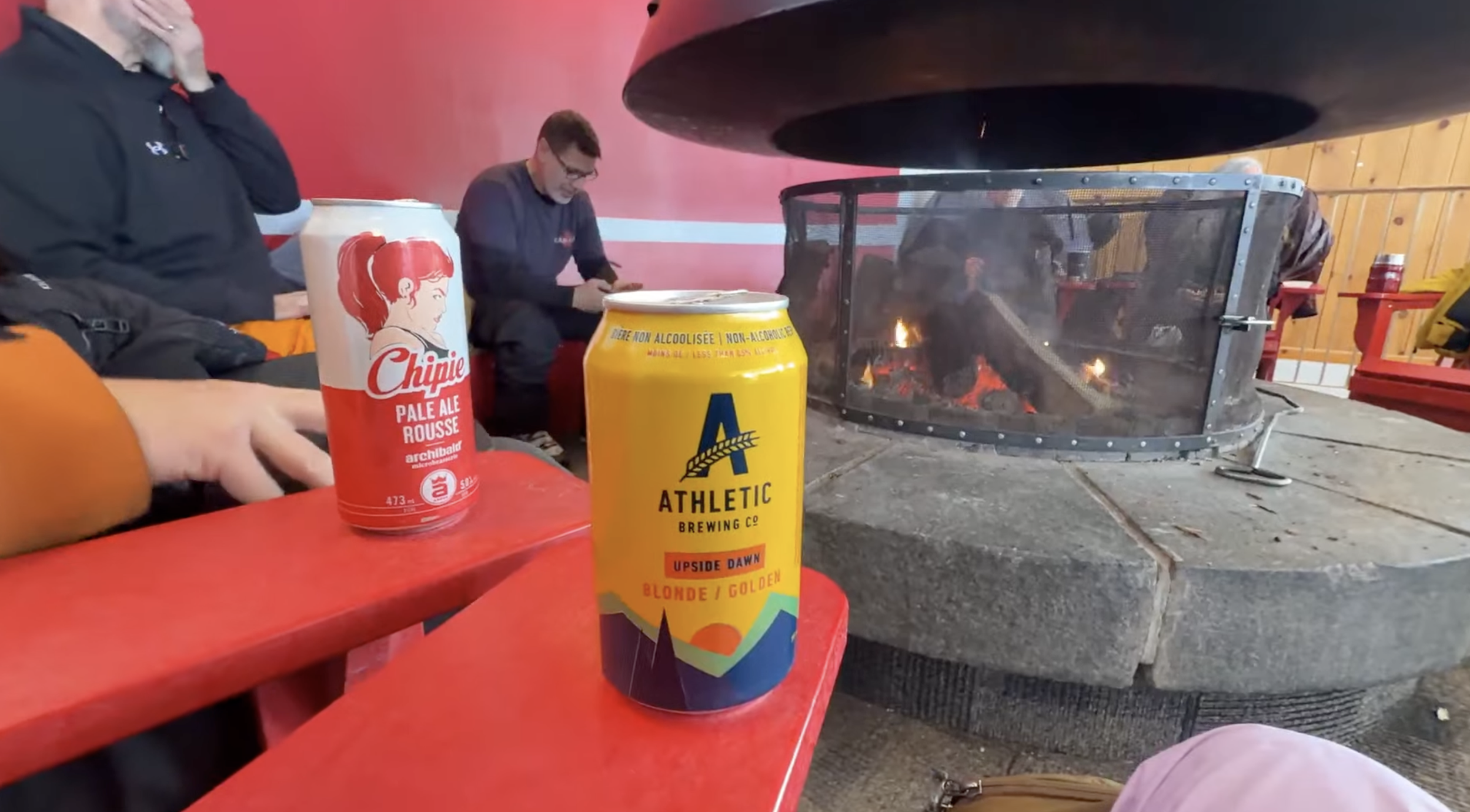
Warming up by the fire
Where to Après
Le P’tit Caribou was one of our favorite places at the base. It’s in the pedestrian village and is known for its lively atmosphere, food, patio, and live entertainment. Check current hours and events for your dates.
The village has plenty of other places for an après drink or snack too, and the walkable layout makes it easy to keep the evening close to your lodging.
Budget Tips
Compare lift-ticket options early. Multi-day tickets, season passes, and Ikon access have different prices, dates, and eligibility rules. Confirm the current terms for your trip.
Stay near the pedestrian village if walkability matters. You can reach shops, restaurants, cafés, and après on foot, and resort shuttles connect many other lodging areas.
Use the village for day-to-day needs. We found enough grocery and specialty options at the base for our stay, along with lots of places to eat. If you plan to cook extensively, check the available grocery selection before relying on it for a full stock-up.
Check transport before booking off-site activities. Some activities are outside the resort and may not include transportation.
Build extra time into winter drives. Road conditions and traffic can change quickly. Check Québec 511 before driving.
Check what’s included in overnight parking. Our campervan stay in P4 Section C worked well for us, but parking isn’t a campground service.
Packing List
Quebec winter weather can shift between cold, wind, snow, and icy conditions. Pack layers for skiing and warm, comfortable clothing for walking around the village. Recheck the forecast and road conditions before you leave.
Clothing
Waterproof jacket
Gloves/mittens (waterproof for skiing + light gloves for walking around)
YakTrax (or something similar) for walking around town if it’s icy
Comfortable clothes for working remotely
Pajamas/loungewear
Swimsuit (I always forget this and end up buying an expensive one there - don’t be me)
Gear
Backpack for the mountain (if you want to carry snacks or road-sodas)
Ikon Pass or your ski lift pass (purchase early for a discounted price)
Toiletries
Moisturizer (cold/dry climate friendly)
Hairbrush + hair ties
Other Essentials
Passport/Driver’s License
Printed accommodation details
Laptop + chargers for remote work
AirTags or luggage tracking devices (especially if checking gear bags)
Final Thoughts
Mont-Tremblant gave us a ski trip with plenty of mountain terrain and a base area we absolutely loved. The pedestrian village felt like a fairytale, with its charming buildings, walkable streets, shops, cafés, restaurants, and après spots all close together. We stayed in our campervan at P4 Section C, skied terrain that worked for different ability levels, and could spend our time at the resort without needing to drive around for every meal or errand.
If you’re looking for a winter destination with skiing, a memorable village, and lots to do close to the mountain, Mont-Tremblant is one we’d happily recommend.
