
Renogy 200W Solar Panel Review | The Solar Panels That Have Powered Our Van for 5 Years of Full Time Travel
This post may contain affiliate links. As full time travelers and outdoor adventurers, we only recommend products we personally use and trust. If you purchase through one of our links, we may earn a small commission at no additional cost to you.
Introduction
One of the questions we get asked most often about vanlife is surprisingly simple:
“How do you power everything?”
The answer is solar.
For the past five years, three Renogy 200W solar panels have quietly powered nearly every aspect of our life on the road. While people often focus on the fun parts of vanlife like mountain biking, snowboarding, hiking, and road trips, the reality is that none of those adventures would be nearly as enjoyable without a reliable power system working behind the scenes.
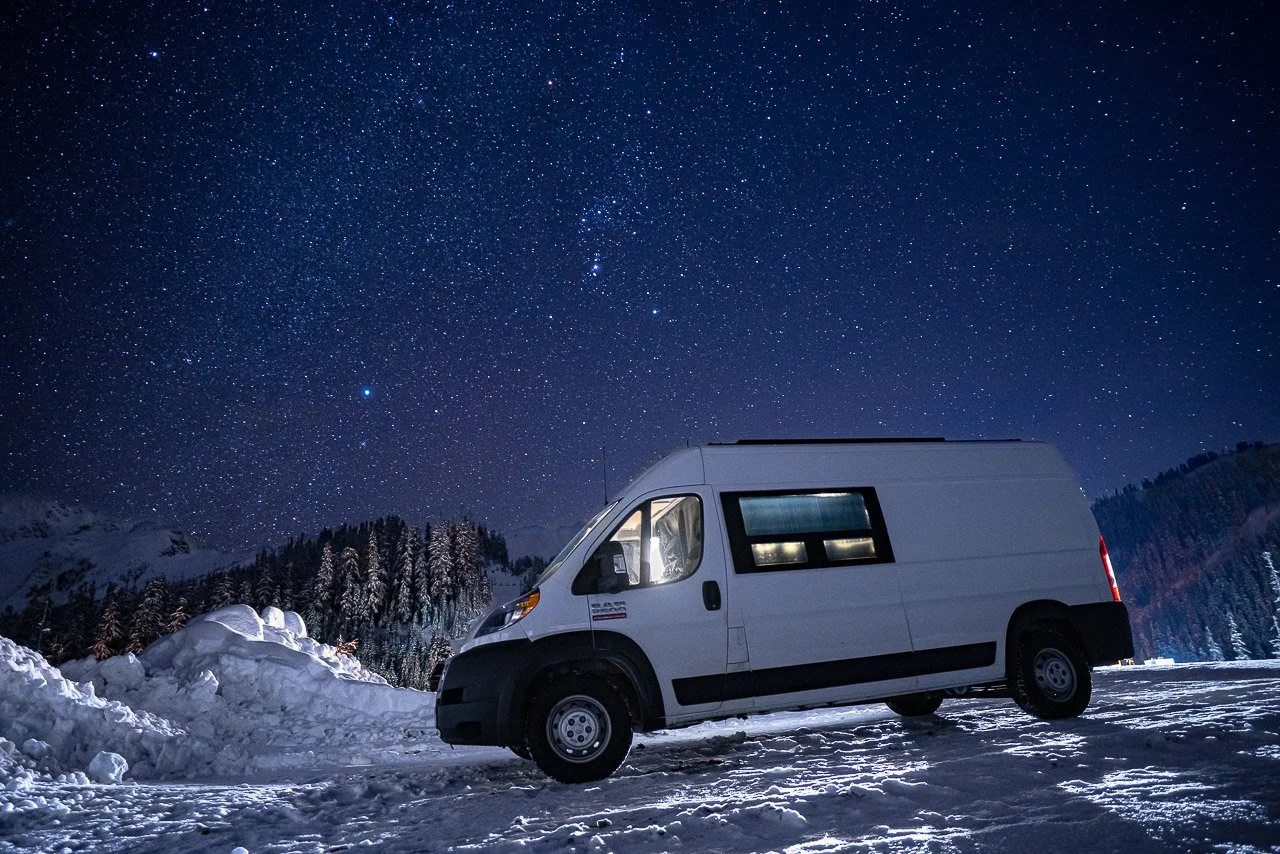
Our solar setup has traveled across the Rockies, the Mountain West, the Pacific Northwest, the Desert Southwest, and beyond. It has endured torrential rainstorms, brutal summer heat, heavy snow, freezing temperatures, and even quarter sized hail.
Through all of it, these panels have continued producing power day after day.
After five years of full time use, I can confidently say that investing in quality solar panels was one of the best decisions we made during our van build.
If you’re researching the best solar panels for vanlife, RV living, off grid travel, overlanding, or mobile work, here’s everything I’ve learned after relying on Renogy solar every single day.
Our Vanlife Solar Setup
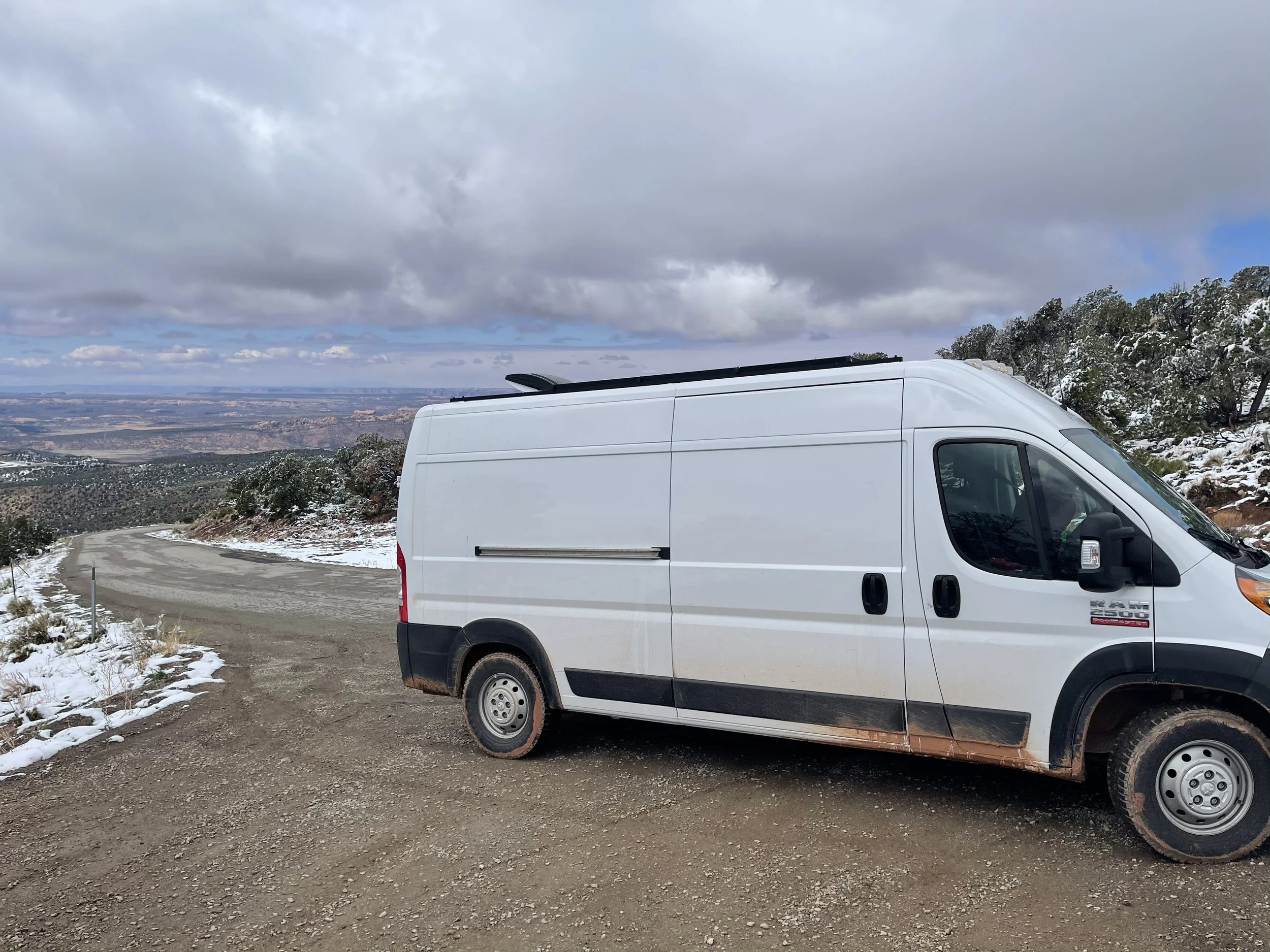
Our system is built around three Renogy 200W solar panels mounted to the roof of our van.
Together, they provide 600 watts of solar capacity feeding two lithium batteries that power nearly everything we use daily.
That includes:
• Refrigerator
• Interior lighting
• Laptop charging
• Camera batteries
• Drone batteries
• Starlink internet
• Ventilation fans
• Water pump
• Phones and electronics
• Induction cooktop
• Remote work equipment
This setup supports two people living full time in a van while working remotely and creating content on the road.
Perhaps the most impressive part is that we’ve never truly needed our backup Jackery Explorer 500 because the solar system consistently keeps up with our energy demands.
Five Years of Real World Durability
Many solar reviews focus on efficiency numbers and laboratory testing.
While those things matter, what really matters is how panels perform after years of abuse.
Our Renogy panels have seen conditions that would challenge almost any piece of outdoor equipment.
They have survived:
• Quarter sized hail in the Mountain West
• Intense summer heat in desert environments
• Heavy rainstorms across North America
• Freezing winter temperatures
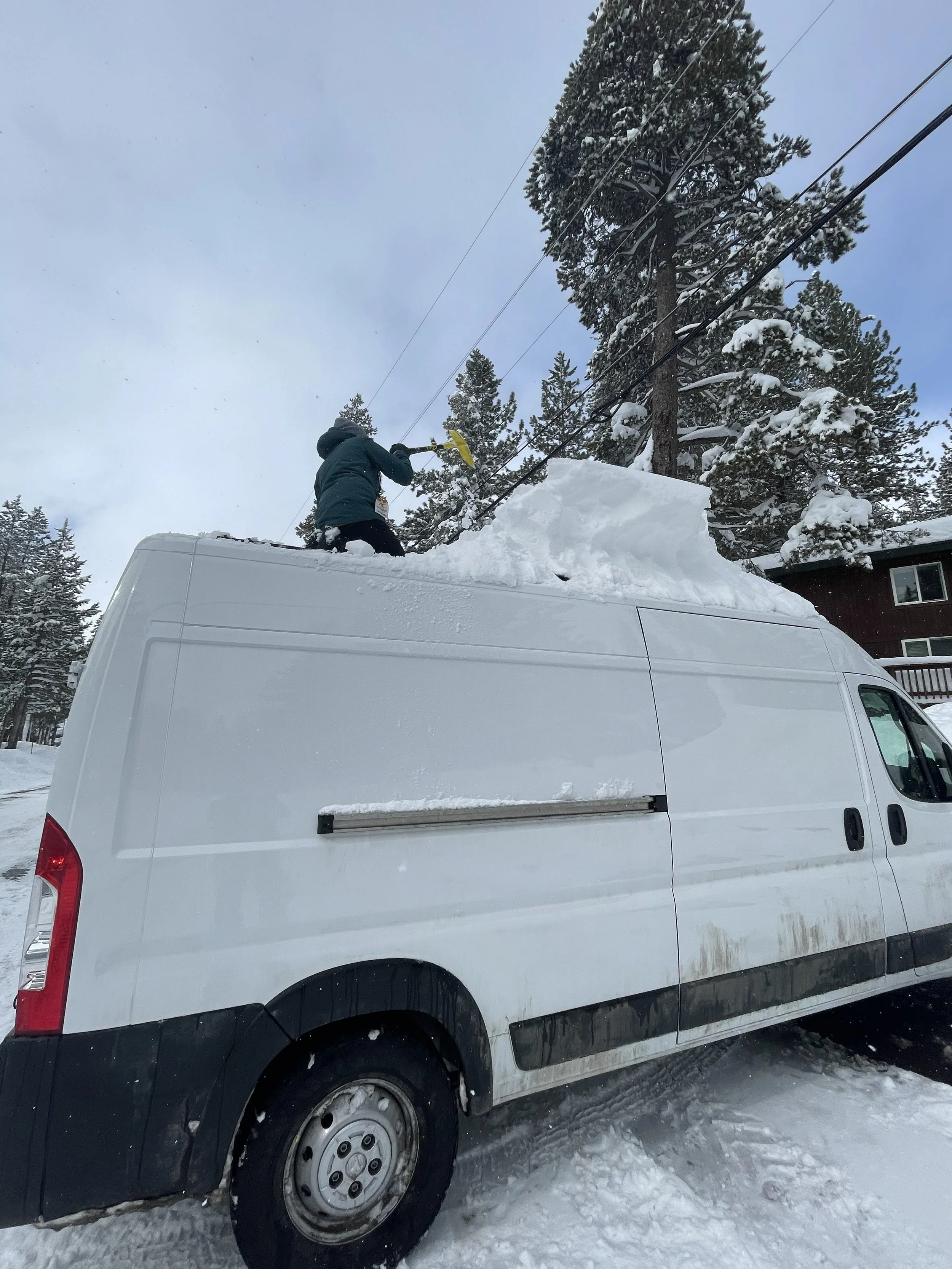
• Snow accumulation
• High altitude UV exposure
• 100 inch snow seasons in the Sierra Nevada region
• Thousands of miles of highway travel
Despite all of that, they continue producing reliable power every day.
There are no cracks. No major performance issues. No structural concerns.
That’s the kind of long term reliability you want from something permanently mounted to the roof of your home.
Why 600 Watts Has Been the Sweet Spot
One of the biggest questions people ask when building a van is:
“How much solar do I actually need?”
For us, 600 watts has been the perfect balance.
It allows us to comfortably support two people living full time on the road without constantly worrying about power consumption.
On sunny days throughout the Rockies, Desert Southwest, and much of the Mountain West, we often generate more energy than we can use.
Even during shoulder seasons and winter travel, the system continues performing well enough that power anxiety is rarely a concern.
The ability to run an induction cooktop is where things become especially noticeable.
Cooking electrically is one of the biggest power demands in vanlife. Having enough solar production to support that lifestyle dramatically changes how comfortable life on the road feels.
The Real Freedom Solar Provides
One thing many reviews overlook is the lifestyle impact of having a properly sized solar system.
Solar is not just about charging batteries.
It’s about freedom.
It allows us to spend days parked beside alpine lakes, forest roads, trailheads, ski resorts, and remote campsites without constantly thinking about hookups or generators.
We can work remotely from mountain towns.
Upload YouTube videos from dispersed campsites.
Edit content deep in the backcountry.
Stay connected with Starlink.
And continue living normally without chasing power sources.
That flexibility is difficult to put a price on.
Performance Across Different Seasons
Over the years we’ve tested these panels in virtually every season imaginable.
Summer
Summer is where the system absolutely shines. Long daylight hours and strong sun exposure often leave our batteries completely topped off by early afternoon.
Fall
Fall may actually be my favorite season for solar. Cooler temperatures improve panel efficiency while sunny weather throughout many mountain regions keeps production strong.
Winter
Winter naturally presents more challenges. Shorter days, lower sun angles, and occasional snow accumulation reduce overall production.
Even so, the system continues generating useful energy and often exceeds our expectations.
Spring
Spring can be unpredictable, but the longer daylight hours quickly boost production as temperatures begin warming.
What Most Solar Reviews Miss
Most solar reviews spend a lot of time discussing efficiency percentages.
While those numbers matter, they do not tell the whole story.
The bigger question is whether your solar system consistently delivers enough energy to support your lifestyle.
After five years of ownership, the answer is a resounding yes.
I rarely think about our solar panels anymore.
They simply work.
And honestly, that may be the highest compliment I can give any piece of gear.
The best equipment often fades into the background because it performs exactly as expected every single day.
Renogy vs Other Solar Panel Brands
There are plenty of solar panel manufacturers available today.
Many offer similar efficiency ratings and specifications.
What has impressed me most about Renogy is their combination of durability, availability, ecosystem support, and proven real world reliability.
For vanlifers, RV owners, and overlanders, having access to compatible charge controllers, batteries, accessories, and replacement components provides additional peace of mind.
The entire ecosystem works well together.
Pros and Cons
Pros
• Outstanding long term durability
• Excellent power production
• Handles extreme weather conditions
• Reliable performance after 5 years
• Supports full time vanlife comfortably
• Works well for off grid travel
• Strong value compared to many premium competitors
• Proven hail and snow resistance
Cons
• Roof space requirements can be challenging
• Installation requires planning
• Winter production is naturally lower
• Initial investment can feel significant
Who These Solar Panels Are Best For
These panels are an excellent fit for:
• Full time vanlifers
• RV travelers
• Overlanders
• Remote workers
• Digital nomads
• Cabin owners
• Tiny home owners
• Off grid enthusiasts
• Adventure travelers
• Anyone seeking energy independence
Final Verdict
After five years of full time vanlife, thousands of nights on the road, and adventures across nearly every type of climate imaginable, these Renogy solar panels have exceeded every expectation I had when we first installed them.
They have survived hailstorms, snowstorms, heat waves, rainstorms, and years of constant exposure while continuing to provide dependable energy day after day.
More importantly, they have given us freedom.
Freedom to work remotely.
Freedom to stay off grid.
Freedom to explore without constantly worrying about power.
For anyone building a van, RV, cabin, or off grid setup, I would not hesitate to recommend Renogy based on our experience.
They have become one of the most dependable pieces of gear on our entire vehicle.
And when your home runs on solar, that reliability matters.
Frequently Asked Questions
Are Renogy solar panels good for vanlife?
Yes. Renogy solar panels are one of the most popular choices among vanlifers because they offer strong performance, durability, and a complete ecosystem of compatible components.
Is 600 watts of solar enough for vanlife?
For many people, yes. Our 600 watt setup comfortably powers two people living full time in a van, including refrigeration, computers, Starlink, lighting, and induction cooking.
How long do Renogy solar panels last?
Most solar panels are designed to last decades. After five years of continuous use, our panels continue performing exceptionally well.
Do solar panels work in winter?
Yes. Solar panels still generate power during winter, although shorter daylight hours and snow coverage can reduce overall production.
Are Renogy solar panels worth it?
Based on our five years of ownership, absolutely. The reliability, durability, and power production have made them one of the best investments in our van.
