
Fall in Colorado: The Ultimate Colorado Road Trip
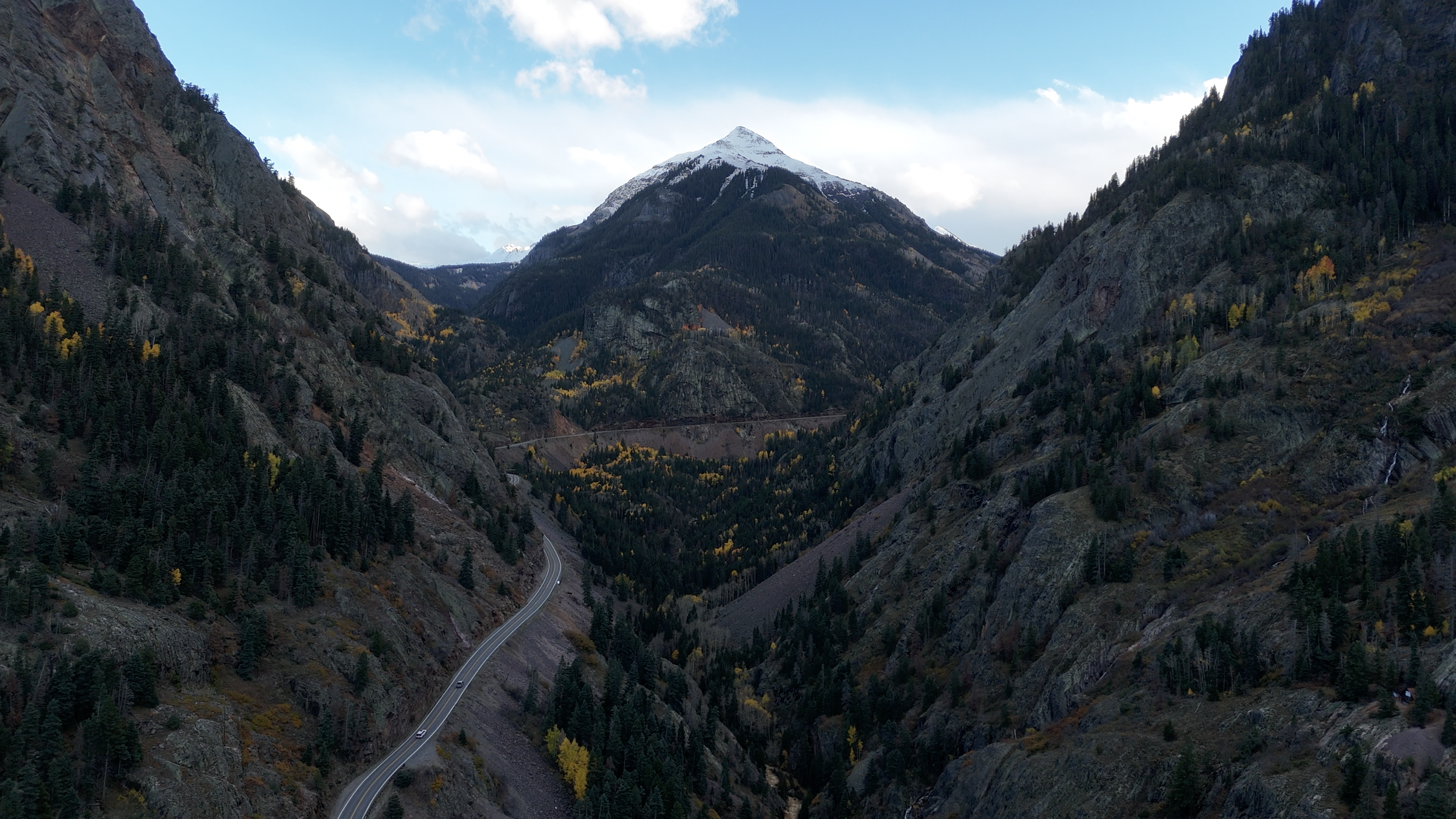
Million Dollar Highway, Colorado
A complete, first-hand guide to road-tripping through Colorado in the fall, from golden aspens and high-alpine hiking to giant sand dunes, historic mining towns, dramatic canyon views, and some of the most beautiful mountain roads in the state.
*We’ve included affiliate links in the article below to help direct you to the spots and gear that we love. Please consider using them if you’re booking a stay or gearing up for your upcoming road trip!
Why Colorado in the Fall?
Colorado in the fall is hard to beat.
The summer crowds start to disappear, the temperatures cool down, and the mountains turn into a patchwork of golden aspens, dark evergreens, and snow-dusted peaks. And the best part? You can experience so many completely different landscapes in one road trip.
Our route took us from Denver through Kenosha Pass and Buena Vista, down to Great Sand Dunes National Park, across to Durango and Silverton, through the San Juan Mountains and the Million Dollar Highway, then north to Black Canyon of the Gunnison, Aspen, and the Maroon Bells before ending in Breckenridge.
It sounds like a lot, but that's kind of the point. Colorado is one of those places where the drive is just as much a part of the adventure as the destination. We wanted to see as much as we could while still leaving enough time to hike, explore, camp, take photos, and actually enjoy each place.
Why we loved fall in Colorado
The fall colors: Colorado's aspens put on an incredible show, especially at higher elevations.
Cooler temperatures: Perfect for hiking, camping, and spending long days outside.
Fewer crowds: Fall is a shoulder season in many Colorado mountain towns.
Wildly different landscapes: You can go from alpine peaks to sand dunes to a 2,000-foot-deep canyon in the same trip.
Mountain towns: Buena Vista, Durango, Silverton, Ouray, Aspen, and Breckenridge all have completely different personalities.
Road-trip scenery: Some of the most memorable parts of our trip happened between the destinations.
Camping: If you have a van, RV, or tent, Colorado gives you plenty of opportunities to get outside and stay close to the landscape.
If you're specifically chasing peak fall color, timing matters. Higher elevations generally change first, and the exact timing varies with elevation, weather, and the year. Around Breckenridge, for example, fall color typically peaks from mid-September into early October.
How to Start Your Road Trip From Denver
Denver is the easiest place to begin this road trip if you're flying into Colorado.
We started in Denver and made our way southwest before gradually looping through central and southern Colorado, eventually working our way back north toward Breckenridge.
Our route looked like this:
Denver → Kenosha Pass → Buena Vista → Great Sand Dunes National Park → Durango → Silverton → Ouray → Black Canyon of the Gunnison National Park → Aspen / Maroon Bells → Breckenridge → Denver
I would plan at least 7–10 days for this route if you want to move at a fairly quick pace. If you have two weeks, even better. There are enough hikes, scenic drives, and mountain towns along the way to easily fill it.
Getting your vehicle
If you're flying into Denver, renting a vehicle is probably the simplest option.
A regular rental car will work for most of this route, especially if you're staying in hotels or vacation rentals. If you're planning to explore more remote Forest Service roads or dispersed camping areas, however, you'll want to pay closer attention to the vehicle's clearance, tires, and rental agreement before heading off pavement.
If you don't have your own RV or camper van, renting a rig through Outdoorsy is another great option. You get the flexibility of having your bed, kitchen, and gear with you without having to own an RV. (Use code SCENICDETOUR10 for 10% off!)
For us, traveling with a van makes a road trip like this much easier. We can spend the night near where we're hiking, make our own meals, and change plans without worrying about a hotel reservation every night.
Stop 1: Denver → Kenosha Pass
Our first leg took us southwest from Denver toward Kenosha Pass.
This is where the landscape starts changing quickly. You're leaving the city behind and climbing into the mountains, and if you time it right, the aspens start showing up in brilliant shades of yellow.
Kenosha Pass is an ideal first stop because you can easily spend a few hours hiking and photographing the fall colors without committing to a huge first-day adventure. Quick tip: Plan this on a weekday. It get get extremely busy and hard to find parking on a weekend as everyone in Denver has the same idea and it’s the closest to the city.
Stop 2: Kenosha Pass → Buena Vista
From Kenosha Pass, we continued toward Buena Vista.
This was our first real mountain-town stop, and it's a great base if your idea of a Colorado vacation involves doing something outside every day. Buena Vista is surrounded by huge peaks, mountain biking trails, rivers, and some of Colorado's most famous 14ers, like Mount Elbert, the highest summit of the Rocky Mountains of North America at 14,440 ft (4,400 m).
This is where we'd recommend slowing down and spending at least a couple of nights if you have the time, especially if doing big hikes. Note that Fall in Colorado is monsoon season, so you’ll want to start your treks early because lightning storms roll in almost daily after 3pm.
Stop 3: Buena Vista → Great Sand Dunes National Park
From Buena Vista, we headed south toward Great Sand Dunes National Park and Preserve.
This is one of the most dramatic landscape changes of the entire trip. One minute you're surrounded by Colorado's high mountains, and the next you're looking at enormous sand dunes stretching toward the Sangre de Cristo Mountains.
Great Sand Dunes offers hiking, backpacking, sandboarding, scenic drives, ranger programs, and more.
And yes, this is one of the more dog-friendly national parks we've visited. Pets are allowed in many of the main day-use areas and throughout much of the National Preserve as long as they're leashed.
There are important restrictions, though. Dogs aren't allowed in the backcountry of the dunefield or in several other areas, so check the current NPS pet map before you go.
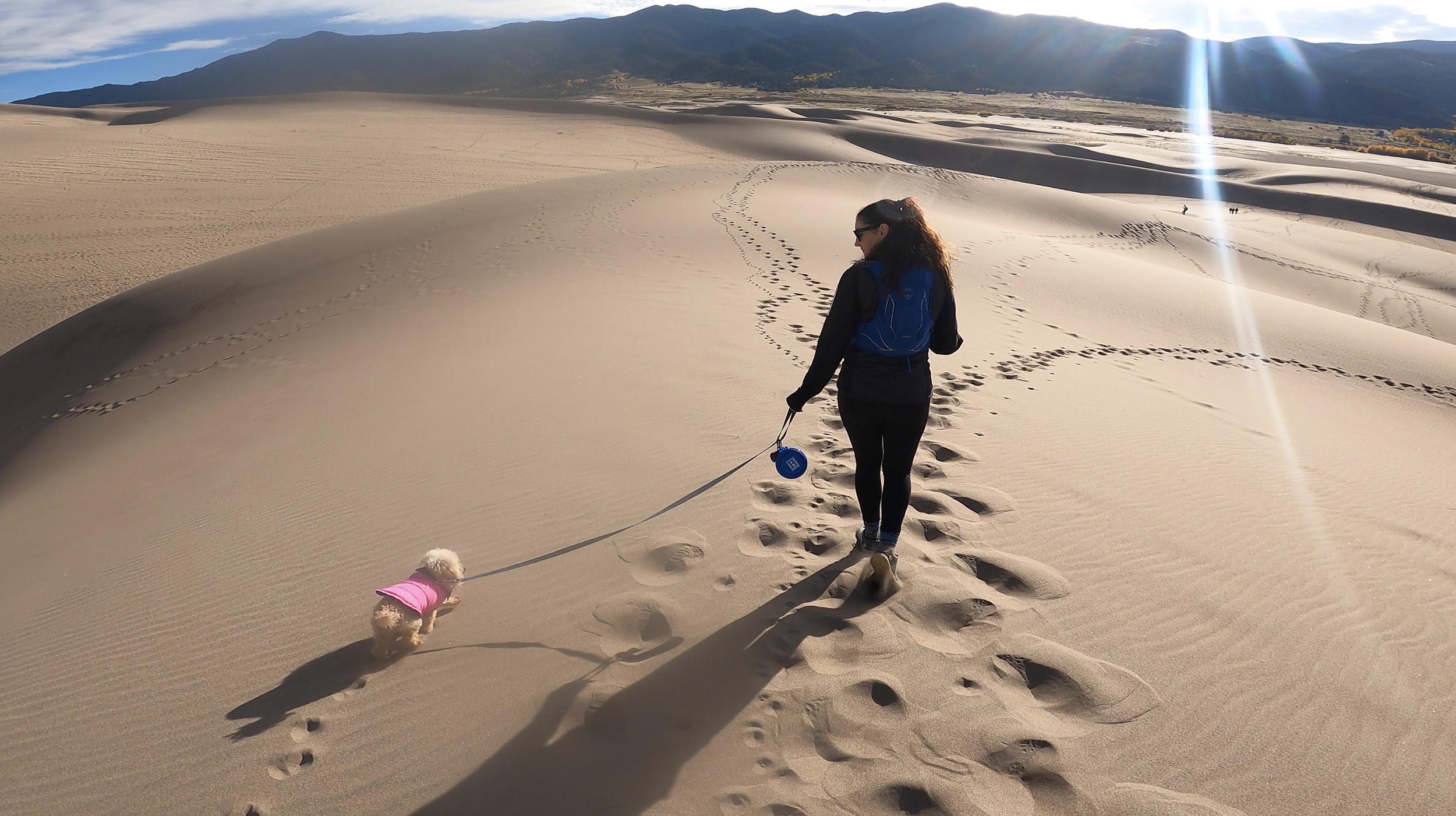
Dogs are allowed in Great Sand Dunes National Park on a leash!
Stop 4: Great Sand Dunes → Durango
After the dunes, we continued southwest toward Durango.
This drive takes you deeper into southern Colorado, and Durango makes a great place to slow down after several days of outdoor adventures.
The town has a great mix of outdoor culture, historic architecture, locally owned shops, restaurants, and the famous Durango & Silverton Narrow Gauge Railroad.
Stop 5: Durango → Silverton
From Durango, we headed north toward Silverton.
The drive is beautiful, and the scenery gets more dramatic as you climb farther into the San Juan Mountains.
Silverton itself is tiny, historic, and full of character. Give yourself time to park the car, walk around downtown, browse the local shops, and take in the old mining-town architecture.
Stop 6: Silverton → Ouray via the Million Dollar Highway
This was one of the drives we were most excited about. From Silverton, we continued toward Ouray on US-550, the Million Dollar Highway.
The route between Silverton and Ouray is about 25 miles and climbs over Red Mountain Pass at more than 11,000 feet. It's narrow, winding, and exposed in places, but the scenery is absolutely incredible.
This is not a road you want to rush, so take your time, stay focused on the road, and pull over only at designated safe areas. You'll have plenty of opportunities to stop for photos without trying to photograph while driving.
Then you'll arrive in Ouray, tucked into a dramatic alpine valley and surrounded by the San Juan Mountains.
Stop 7: Ouray → Black Canyon of the Gunnison National Park
After exploring Ouray, we headed north toward Black Canyon of the Gunnison National Park.
This was one of the biggest surprises of the trip because the landscape changes so dramatically. You're trading the towering alpine peaks of the San Juans for sheer canyon walls and some of the darkest, most dramatic rock scenery in Colorado.
The South Rim is especially easy to explore on a road trip. The South Rim Drive follows the canyon for seven miles and has 12 overlooks, many accessible by short trails. The National Park Service recommends allowing about 2–3 hours to see several of the major viewpoints.
If you have more time, stay longer for one of the rim trails or explore the area around the South Rim Visitor Center.
Stop 8: Black Canyon → Aspen + Maroon Bells
From Black Canyon, we continued north toward Aspen and the Maroon Bells.
This was the perfect way to start wrapping up the road trip. The landscape changes again as you head toward the Elk Mountains, and then you arrive at one of the most iconic views in Colorado.
The Maroon Bells are especially spectacular during fall when the surrounding aspens turn gold against the dark red peaks. If you're visiting during the reservation season, make sure you plan ahead. The Maroon Bells system uses either a trailhead parking reservation or shuttle reservation depending on the time of day and season. We got lucky in October because we just paid an entrance fee and were able to park right at the trailhead with no crowds or shuttle required.
After exploring the Bells, spend some time in Aspen itself. Wander the local shops, grab coffee, and enjoy the very different atmosphere of one of Colorado's most famous mountain towns.
Stop 9: Aspen → Breckenridge
Our final leg took us from Aspen north toward Breckenridge.
After spending so much time in southern Colorado and the San Juans, Breckenridge felt like the perfect final stop before heading back toward Denver.
It's also another fantastic place to catch fall color. The surrounding mountains turn gold in September and early October, and scenic drives like Boreas Pass offer classic Colorado fall scenery.
From Breckenridge, it's an easy drive back to Denver to finish the trip.
Where We Stayed
We mainly stay on public land when we're traveling by van.
It's one of our favorite parts of road-tripping because we don't necessarily need to plan where we're sleeping every night. Instead, we can find a legal place to camp near where we want to explore and wake up surrounded by the landscape.
Two of our favorite resources for this are:
iOverlander: Great for finding dispersed camping, overnight spots, dump stations, water, and other van-life resources.
onX Backcountry: We use the Dispersed Camping Layer to help identify public land and potential areas where dispersed camping may be allowed.
One important caveat: don't assume that a spot on an app is automatically legal to camp in. We always check the land manager, current restrictions, road conditions, fire restrictions, and signage before staying anywhere. Rules can change seasonally, and fall is also a time when weather can change quickly at elevation. When in doubt, check with the relevant Forest Service, BLM, state, county, or park office.
Other places to Stay
Whether you're looking for a cozy mountain cabin, a boutique hotel, or the most affordable place to crash after a long day outside, there are plenty of options along this route. We've broken them down by price range so you can easily find something that fits your trip.
Luxury
Kenosha Pass: Look for private mountain homes and larger cabins around Fairplay and Jefferson through Airbnb or Vrbo. These are a great option if you're looking for privacy and mountain views.
Buena Vista: Mount Princeton Hot Springs Resort is the splurge-worthy option here, especially if you want to combine outdoor adventure with a little relaxation. Surf Hotelis another stylish option right in town.
Great Sand Dunes National Park: Zapata Ranchoffers a unique luxury ranch experience near the dunes. You can also find larger private homes and mountain properties around the San Luis Valley through Airbnb or Vrbo.
Durango: Strater Hotel is a historic downtown icon, while the Rochester Hotel offers a more intimate boutique experience.
Silverton: The Wyman Hotelis a beautifully restored boutique hotel, while the Grand Imperial Hotel offers historic charm right in downtown Silverton.
Ouray: Beaumont Hotel & Spa and The Western Hotel & Spa are both great options if you want a little luxury in this tiny mountain town.
Black Canyon of the Gunnison: For a more upscale stay, base yourself in nearby Montrose and look for a higher-end hotel or vacation rental.
Aspen: The Little Nell is the classic luxury choice, while Hotel Jerome brings historic character and a prime downtown location.
Breckenridge: Look for upscale condos and mountain homes around town, particularly if you're traveling with a group and want a little more space.
Mid-Range
Kenosha Pass:Mountain cabins and vacation rentals around Fairplay offer a comfortable place to stay without the prices you'll find farther into Summit County.
Buena Vista: The Eddy Taproom & Hotel is a fun, modern option close to downtown, or look for a private cabin or vacation rental nearby.
Great Sand Dunes National Park: Great Sand Dunes Lodge is one of the closest lodging options to the park, while Alamosa has several comfortable hotels if you want more amenities.
Durango: General Palmer Hotel gives you a historic downtown location, while Homewood Suites by Hilton Durangois a good option if you want more space and kitchen amenities.
Silverton: Teller Houseand The Bent Elboware both historic options with plenty of character and easy access to downtown.
Ouray: Box Canyon Lodge & Hot Springs is a great combination of comfortable lodging and hot springs, while Hot Springs Innoffers a quieter stay just outside the center of town.
Black Canyon of the Gunnison: Montrose is your best bet for a wider selection of mid-range hotels, including Hampton Inn Montrose and Holiday Inn Express Montrose.
Aspen: Limelight Hotel Aspen is a comfortable, modern option in the heart of town, while Aspen Meadows Resort offers a quieter setting surrounded by mountains.
Breckenridge: Look for condos, vacation rentals, and centrally located hotels around downtown for the best combination of convenience and comfort.
Budget-Friendly
Kenosha Pass: Fairplay has several simple motels that make a convenient base for exploring Kenosha Pass. Camping is also a great option in the surrounding national forest.
Buena Vista: Local motels are your best bet for an affordable room, or skip the hotel altogether and camp in the surrounding public lands.
Great Sand Dunes National Park: Piñon Flats Campground is the obvious choice if you want to sleep inside the park. Otherwise, Alamosa has several affordable motels.
Durango: There are several classic, no-frills motels around town, as well as campgrounds and RV parks if you're traveling with your own rig.
Silverton: Silverton has a handful of simple inns and motels, but camping in the surrounding San Juan Mountains is one of the best ways to keep costs down.
Ouray: Look for smaller local motels, campgrounds, and tent sites around town and along the surrounding mountain roads.
Black Canyon of the Gunnison: South Rim Campground is a great budget option if you want to stay inside the park. Otherwise, Montrose has several affordable motels.
Aspen: Aspen itself isn't exactly known for budget accommodations, so look toward Basalt or Carbondale for more affordable hotels and vacation rentals. Camping outside Aspen is another option if you're equipped for it.
Breckenridge: The Bivvi Hostel is one of the better budget-friendly options, or look for vacation rentals outside the immediate downtown area for lower rates.
A few things to know before booking
Fall can be a surprisingly popular time to visit Colorado, especially around peak foliage weekends. If you're planning to visit in late September or early October, I'd recommend booking your accommodations ahead of time, particularly in Aspen, Breckenridge, Ouray, and Buena Vista.
And if you're trying to keep the trip affordable, don't be afraid to stay 15–30 minutes outside the destination. Colorado's mountain towns are beautiful, but sometimes the best place to save money is simply sleeping just outside them.
Budget Tips
Colorado can get expensive very quickly, especially in places like Aspen and during peak fall-color weekends.
But this trip can also be surprisingly affordable if you're willing to camp, cook, and be flexible.
Our favorite ways to save money
Camp on public land: If you have a van or camping setup, this can save you hundreds of dollars.
Use iOverlander: Great for finding potential overnight spots, services, and camping information.
Use onX Backcountry: The Dispersed Camping Layer is especially useful when you're trying to identify public land.
Always verify camping regulations: Apps are helpful, but they're not the final authority.
Cook your own meals: Stock up in Denver, Buena Vista, Durango, or another larger town rather than buying everything in small mountain towns.
Bring a cooler: Pack lunches and snacks so you're not buying food every time you get hungry on the road.
Stay outside Aspen: Basalt and Carbondale can be much more budget-friendly.
Travel midweek: Mountain towns are generally quieter and lodging can be more affordable.
Book Maroon Bells early: Don't build your entire itinerary around the Bells and assume you'll figure out parking when you arrive.
Download your maps: Cell service isn't something we rely on when we're deep in the mountains. onX Backcountry allows you to download maps for offline use, which includes trailheads and trail information, recent imagery to check conditions, and ability to build your own route, all available offline.
Bring layers: Fall weather in Colorado can range from warm sunshine to freezing temperatures surprisingly quickly.
Don't over-schedule: This might actually be the best budget tip. If you give yourself room to linger, you won't feel like you need to pay for an activity at every stop.
The biggest budget tip?
Bring your own home, or at least rent one. Traveling by camper van or RV makes this road trip dramatically more flexible. You can sleep near your next trailhead, cook your own breakfast, move on when the weather changes, and spend more money on experiences instead of hotels.
And if you don't have your own rig, that's where a rental platform like Outdoorsy can make the road-trip lifestyle accessible without buying a van.
Final Thoughts
This Colorado road trip ended up being so much more than a fall foliage trip. We started with golden aspens at Kenosha Pass, spent time surrounded by 14ers in Buena Vista, walked across enormous sand dunes, explored historic mining towns, drove one of Colorado's most famous mountain highways, stood above the Black Canyon of the Gunnison, watched the aspens glow around the Maroon Bells, and finished in Breckenridge.
And that's what makes Colorado such a fun road-trip destination: the landscape keeps changing. Just when you think you've found the most beautiful part of the trip, you turn another corner and find something completely different.
If you have the time, don't rush this route. Take the scenic detour, pull over for the view, stay an extra night somewhere you love, and take the dirt road when it's legal and safe. Leave a little room in the itinerary for the places you didn't know you'd want to see, because those are usually the best parts.
Packing List
Clothing
YakTrax (or something similar) for walking around town if it’s icy
Comfortable clothes for working remotely
Pajamas/loungewear
Swimsuit (I always forget this and end up buying an expensive one there - don’t be me)
Toiletries
Moisturizer (cold/dry climate friendly)
Hairbrush + hair ties
Other Essentials
Printed accommodation details
Travel adapter if arriving from an international area
Laptop + chargers for remote work
🛒 Shop Our Entire Amazon Storefront
🐶 Start The Best Job In The World – Become a Pet Sitter on Rover
🌄 Want to try vanlife for a weekend? Grab an RV or campervan on Outdoorsy! Use code SCENICDETOUR10 for 10% off!
