
Tokyo in Winter: A Complete Travel Guide + Mount Fuji Day Trip
We explored Tokyo for 3 days before heading to Hokkaido
Winter in Japan is the perfect mix of energy, culture, and calm. Plus, starting in Tokyo before heading north to ski made the entire trip feel more balanced. This guide covers exactly how we spent our first few days in Tokyo and Mount Fuji, including transportation tips, must-visit places, food stops, and a Mount Fuji day trip that’s absolutely worth adding to your itinerary.
This is Part 1 of our Japan winter trip and focuses on the pre-ski portion before heading to Hokkaido.
*We’ve included affiliate links in the article below to help direct you to the spots, experiences, and gear that we love. Please consider using them if you’re booking a stay or gearing up for your Japan adventure!
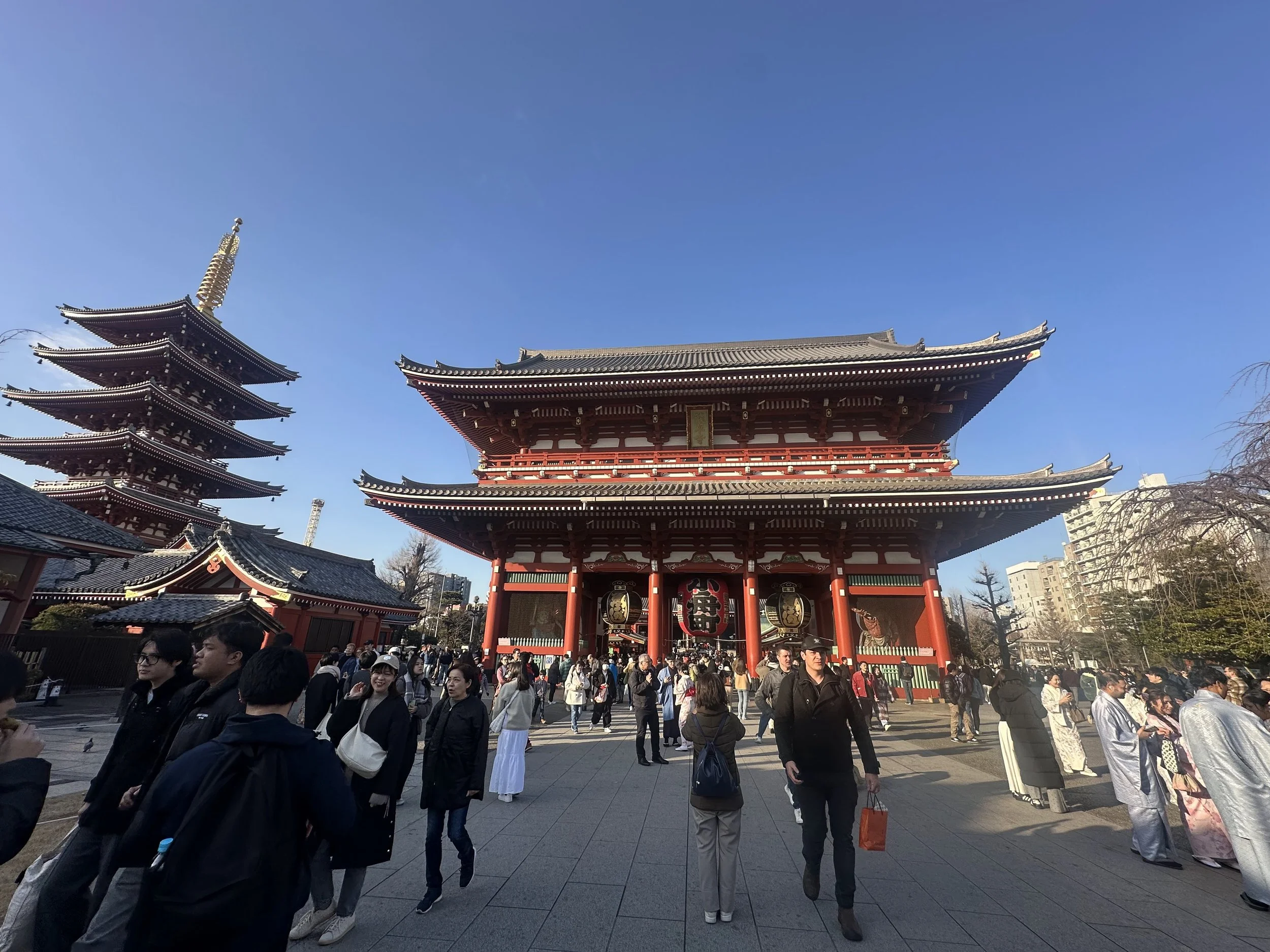
Senjoji Temple, Asakusa, Tokyo
Getting to Tokyo & Getting Around (with Ski Gear)
Flying into Japan
We flew from Denver (DIA) → Vancouver (YVR) → Narita International Airport (NRT). This route ended up being one of the easiest and smoothest options for us, especially when traveling with ski gear. There are direct options, but they were much pricier.
There are several airports you can fly into around Tokyo, Narita (NRT) and Haneda (HND) are the most common, but for our flights and connections, Narita made the most sense. It’s very well connected to the city by train, even if it’s farther outside Tokyo proper.
If you’re booking your own trip, we recommend choosing the airport with the best international flight options and connections from your home city. Getting into Tokyo from either Narita or Haneda is straightforward.
Shipping Ski Gear at Narita Airport
After landing at Narita International Airport, our first stop was the Yamato Transport (Kuroneko Yamato) counter inside the terminal.
If you’re traveling with ski or snowboard gear, this is one of the best decisions you can make. Yamato Transport packaged our ski bags and shipped them directly to our accommodation in Hokkaido, which meant we didn’t have to haul bulky gear through train stations or busy city streets in Tokyo.
What you’ll need:
Your final destination address
A contact phone number
Your accommodation booking reference (if applicable)
Once everything was checked and shipped, we were free to travel light for the rest of our time in Tokyo.
Taking the Train from Narita Airport to Shinjuku
Getting from Narita Airport to Shinjuku is very manageable, even if it feels overwhelming at first.
After clearing customs, follow the signs in the airport for “Trains” / “JR Line.” Narita is well-marked in English, and there are information counters if you need help.
We used the JR Sobu Line (Rapid) to get into the city.
Here’s how it works:
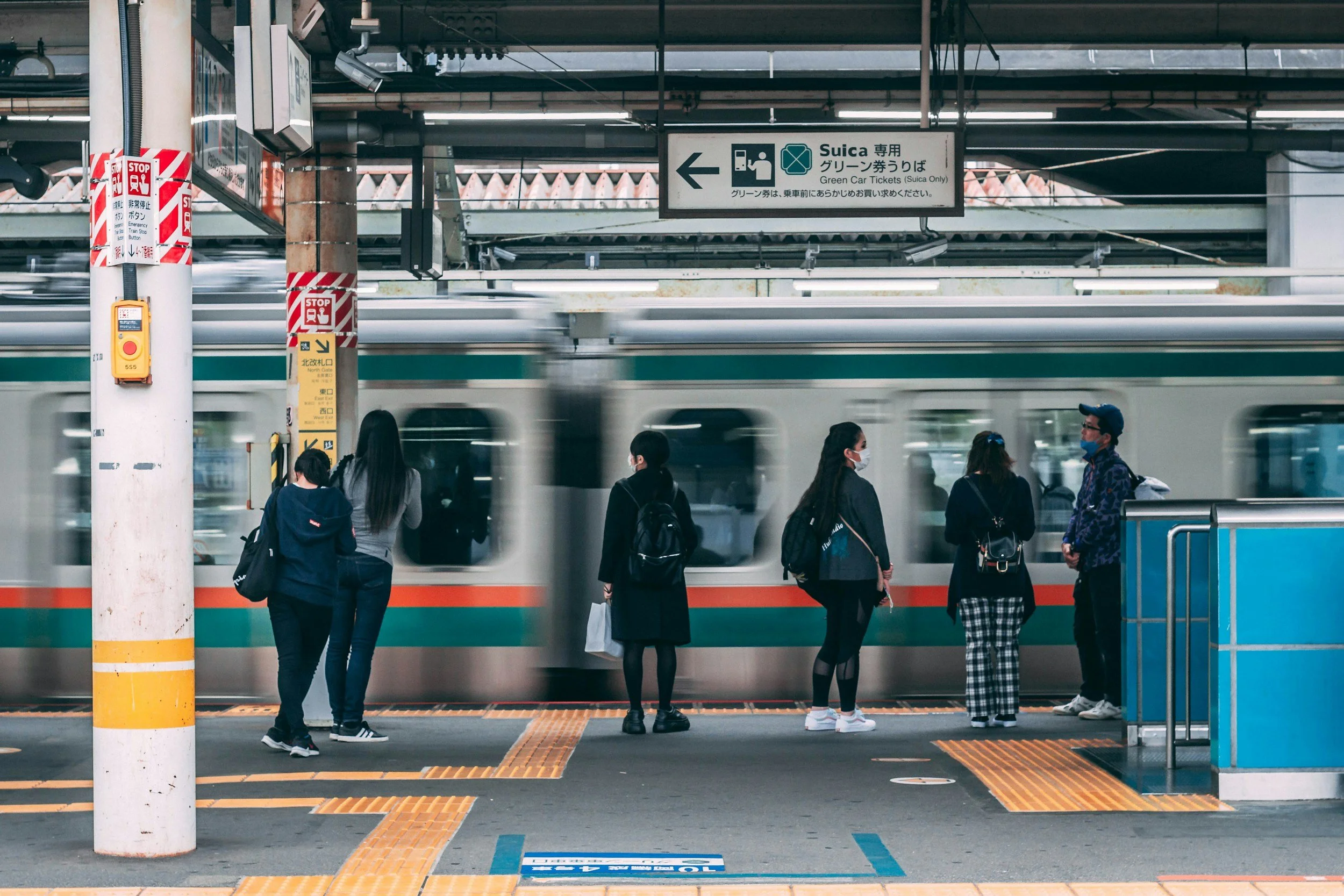
Purchase a ticket or use an IC card (Suica or Pasmo)
Board the JR Sobu Line (Rapid) from Narita Airport
Stay on the train until Shinjuku Station
From Shinjuku Station, we transferred to the JR Sobu Line (Local) and rode one stop to Okubo Station.
Once you exit Okubo Station, our condo was just a short walk from the North Exit.
Why this route works well:
Minimal transfers
Easy to follow signage
Luggage-friendly trains
If you’re staying elsewhere in Tokyo, Google Maps works extremely well for real-time train directions and platform numbers.
Where We Stayed
We stayed in Shinjuku, near Okubo Station in a cute, central condo. This area was extremely convenient for public transportation, late-night food, and easy access to nearly every part of Tokyo we wanted to explore. The accommodation was perfect for all 6 of us and was so easy to find!
Staying in Shinjuku gave us:
Direct train access to major neighborhoods
Walkable cafes and convenience stores
A lively atmosphere at night, but not too loud
Other places to Stay
Tokyo has no shortage of great places to stay, and choosing the right neighborhood can make a big difference. Shinjuku is a fantastic home base for first-time visitors thanks to its transportation access and nightlife, but these recommendations work across central Tokyo.
Luxury
HOTEL AMANEK Shinjuku-Kabukicho: Ultra-luxury hotel offering serene, minimalist design, a world-class spa, and sweeping city views. Ideal for travelers looking for a calm retreat in the heart of Tokyo.
Park Hyatt Tokyo: Iconic luxury hotel located in Shinjuku with spacious rooms, incredible skyline views, and top-tier dining. A great option for couples or travelers wanting a refined stay close to major transit.
Mid-range
Hotel Groove Shinjuku: Stylish, modern hotel in Kabukicho Tower with comfortable rooms and an unbeatable Shinjuku location.
Hotel Sunroute Plaza Shinjuku: Reliable, well-located hotel near Shinjuku Station offering great value, easy airport access, and comfortable accommodations.
Budget-friendly
UNPLAN Shinjuku: Clean, modern hostel with both private rooms and dorms, perfect for budget-conscious travelers who still want a social atmosphere.
Hotel Gracery Shinjuku: Known for its Godzilla terrace, this hotel offers compact but comfortable rooms in a prime Shinjuku location at a reasonable price point.
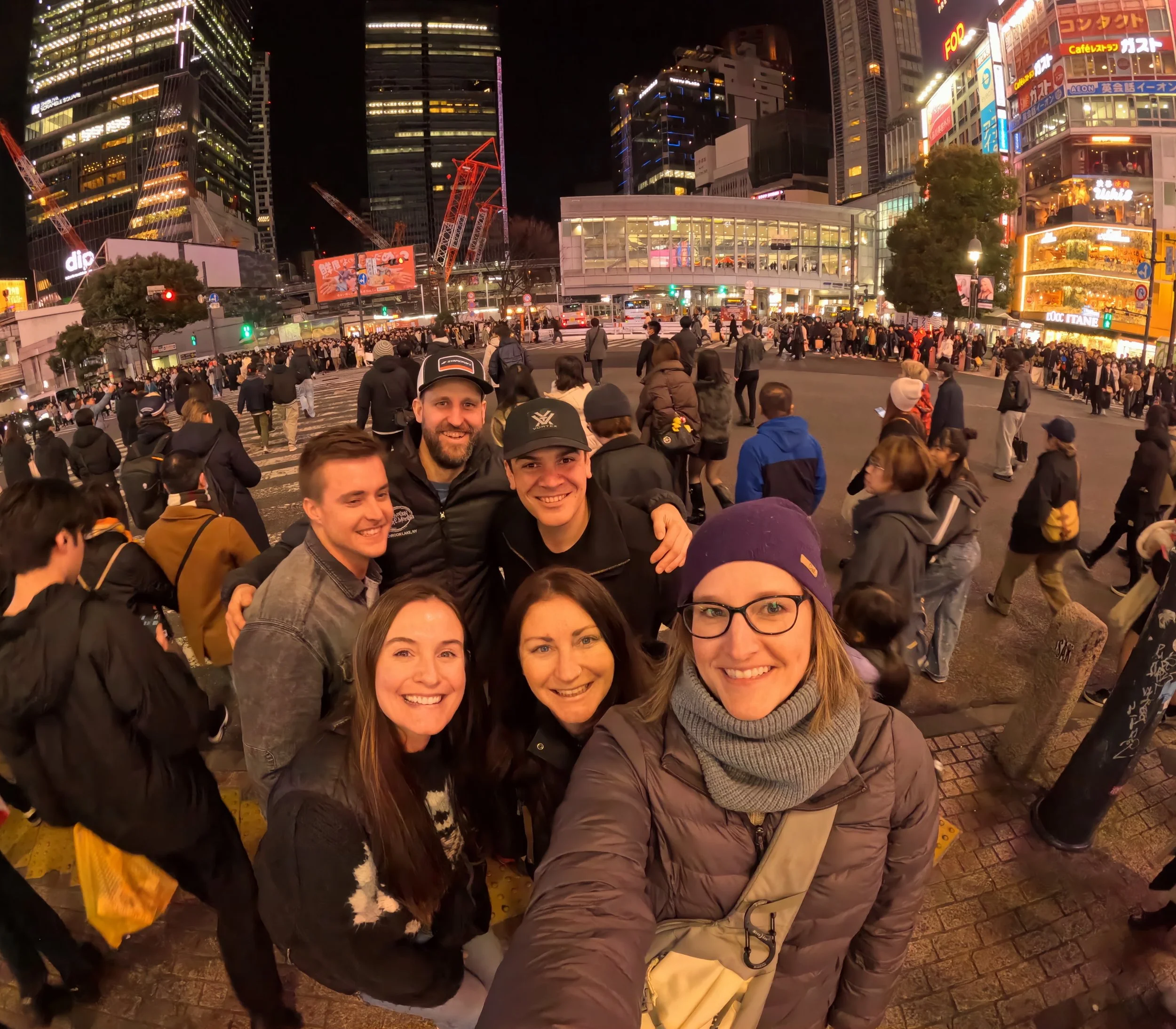
Shibuya Crossing, Tokyo, Japan
Day 1: Shinjuku Nights & First Taste of Tokyo
Shibuya, SOAK, and Golden Gai
After settling in, we headed out to explore Shinjuku.
Our first stop was Shibuya Crossing, one of the busiest pedestrian crossings in the world. Watching the organized chaos from above, and then walking through it ourselves. It was a classic Tokyo moment.
From there, we grabbed drinks at Soak, a rooftop bar with city views, before wandering through Golden Gai. This area is known for its tiny, character-filled bars packed into narrow alleyways, each with its own personality.
We were jet-lagged and exhausted, so picked up some more snacks at the 7-Eleven (pocket sushi for the win) and hung out at our condo.
Day 2: Markets, Shopping & Historic Tokyo
Tsukiji Outer Market
We woke up early and headed to Tsukiji Outer Market, which was easily one of our favorite experiences in Tokyo. It’s about a twenty minute train ride, and was really cheap. The market is busy, vibrant, and packed with food stalls serving incredibly fresh seafood.
Yes, sushi for breakfast is absolutely the move here.
Plan to arrive early to beat the crowds and give yourself time to wander, snack, and explore.
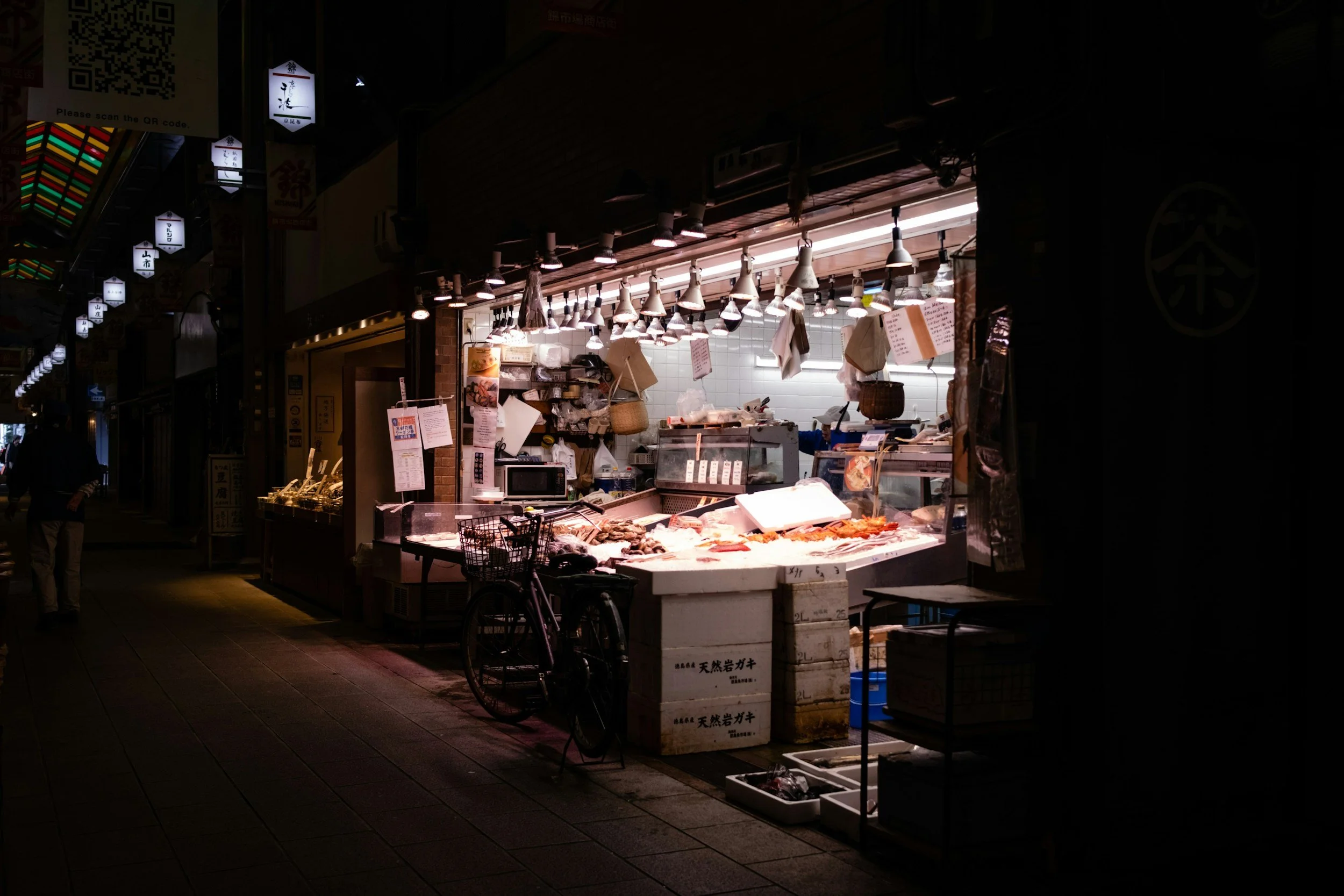
Tsukiji Outer Market, Tokyo, Japan
Kappabashi Street
After Tsukiji, we took the train to Kappabashi Street, a shopping district dedicated almost entirely to kitchen goods and restaurant supplies.
This is the place to shop for:
Japanese chef knives
Ceramics and bowls
Tea sets and cooking tools
We all left with knives and even found a spot offering sake tasting, which made the experience even better.
Important note: Many shops are closed on Sundays and public holidays, so plan accordingly.
Sensoji Temple & Asakusa
In the afternoon, we made our way to Sensoji Temple in Asakusa, one of Tokyo’s most famous and historic temples.
The approach to the temple is lined with traditional shops, lanterns, and street food, and the temple grounds themselves are beautiful and peaceful. A perfect contrast to the city’s faster pace.
Day 3: Mount Fuji Day Trip
Booking & Transportation
We booked our Mount Fuji day trip train tickets a few weeks in advance using Klook, which made the entire process seamless.
On the day of travel:
We scanned our QR codes at the station
Printed our tickets
Took the train from Shinjuku Station to Kawaguchiko Station
The trip takes about two hours and is very straightforward.
Getting Around Kawaguchiko
Once we arrived, we looked at the Fujikawaguchiko sightseeing bus map. There are three loop options (Red, Green, and Blue lines) and a day pass costs around $10 USD.
We took the Red Line, which stops at many of the most scenic viewpoints.
Oishi Park & Fuji Views
Our main stop was Oishi Park, one of the best places to see Mount Fuji on a clear day.
Here you’ll find:
Open views of Mount Fuji across the lake
Walking paths and gardens
Small food stands for snacks and ice cream
We spent time walking the grounds and taking in the views before heading back toward the station.
Back to Tokyo
After returning to Tokyo, we ended the day with ramen at a spot where you order everything from a vending machine before sitting down. It was efficient, easy, and incredibly good.
Other Popular Activities
Tokyo Shinjuku Sumo Show Experience (We had this recommended to us by multiple people, but we sadly didn’t have enough time!)
Tokyo Bay Yakatabune Dinner/Day Cruise with Japan Show and Drinks
Tokyo Shinjuku Chopsticks Making Class (We just bought some, but this would have been so fun!)
Tokyo Skytree Admission Ticket with Tembo Deck and Galleria (We didn’t get our tickets early enough, so they were booked out while we were here, so make sure to book before your trip
Popular Sushi Making Class in Asakusa
Why We Recommend Starting in Tokyo
Spending a few days in Tokyo before heading north to ski made the trip feel far more balanced. It gave us time to adjust to the time change, experience Japan’s culture and food scene, and ease into travel before the more active ski portion.
If you’re planning a winter trip to Japan, starting in Tokyo and adding a Mount Fuji day trip is absolutely worth it.
Budget Tips
Tokyo can feel expensive at first, but there are plenty of ways to keep costs reasonable without sacrificing the experience. One of the easiest ways to save money is by eating a mix of restaurant meals and convenience-store food. Japanese convenience stores like 7-Eleven, Lawson, and FamilyMart have surprisingly high-quality meals and snacks, perfect for breakfast or quick lunches on the go.
Using public transportation instead of taxis is another major cost saver. Trains and buses are clean, efficient, and easy to navigate, especially with Google Maps. Picking up an IC card like Suica or Pasmo makes getting around even easier and helps avoid buying single tickets every time.
If you’re traveling with ski or snowboard gear, shipping your bags through Yamato Transport instead of carrying them around the city is well worth the cost. It saves time, stress, and often ends up cheaper than taxis or oversized luggage fees.
For sightseeing, many of Tokyo’s best experiences are completely free. Places like Sensoji Temple, neighborhood walks, and markets offer incredible cultural experiences without an entry fee. For Mount Fuji, booking your train tickets in advance through platforms like Klook can help lock in pricing and avoid last-minute stress.
Lastly, try to plan your Tokyo stay outside of major holiday periods if possible. Hotel rates can jump significantly during peak travel times, and visiting just before or after busy weekends can make a noticeable difference in overall cost.
Coming up next: Part 2 of our Japan winter trip: heading north to Hokkaido for skiing in Niseko, Rasutsu, and Otaru.
Packing List (For both Tokyo and Hokkaido)
Clothing
Gloves/mittens (waterproof for skiing + light gloves for walking around)
YakTrax (or something similar) THESE ARE A MUST IN NISEKO
Comfortable clothes for working remotely
Pajamas/loungewear
Swimsuit (I always forget this and end up buying an expensive one there - don’t be me)
Gear
Backpack for the mountain (if you want to carry snacks for road-sodas)
Ikon Pass or your ski lift pass (purchase early for a discounted price and take it with you everywhere for free buses)
Toiletries
Moisturizer (cold/dry climate friendly)
Hairbrush + hair ties
Other Essentials
Passport
Train tickets or Swiss Travel Pass
Printed accommodation details
Laptop + chargers for remote work
AirTags or luggage tracking devices (especially if checking gear bags)
